Shaping a unified design system

Transformed fragmented design systems into a unified foundation for scalable experiences, now supporting enterprise products and adopted across product, design, and engineering teams.

Company:

Zelis

Role:

Product designer

Date:

2021-2023

Partners:

Team: Product Design, Frontend Engineering, Product Management

Design · Engineering · Product

System matuirty

Distinct and nascent systems

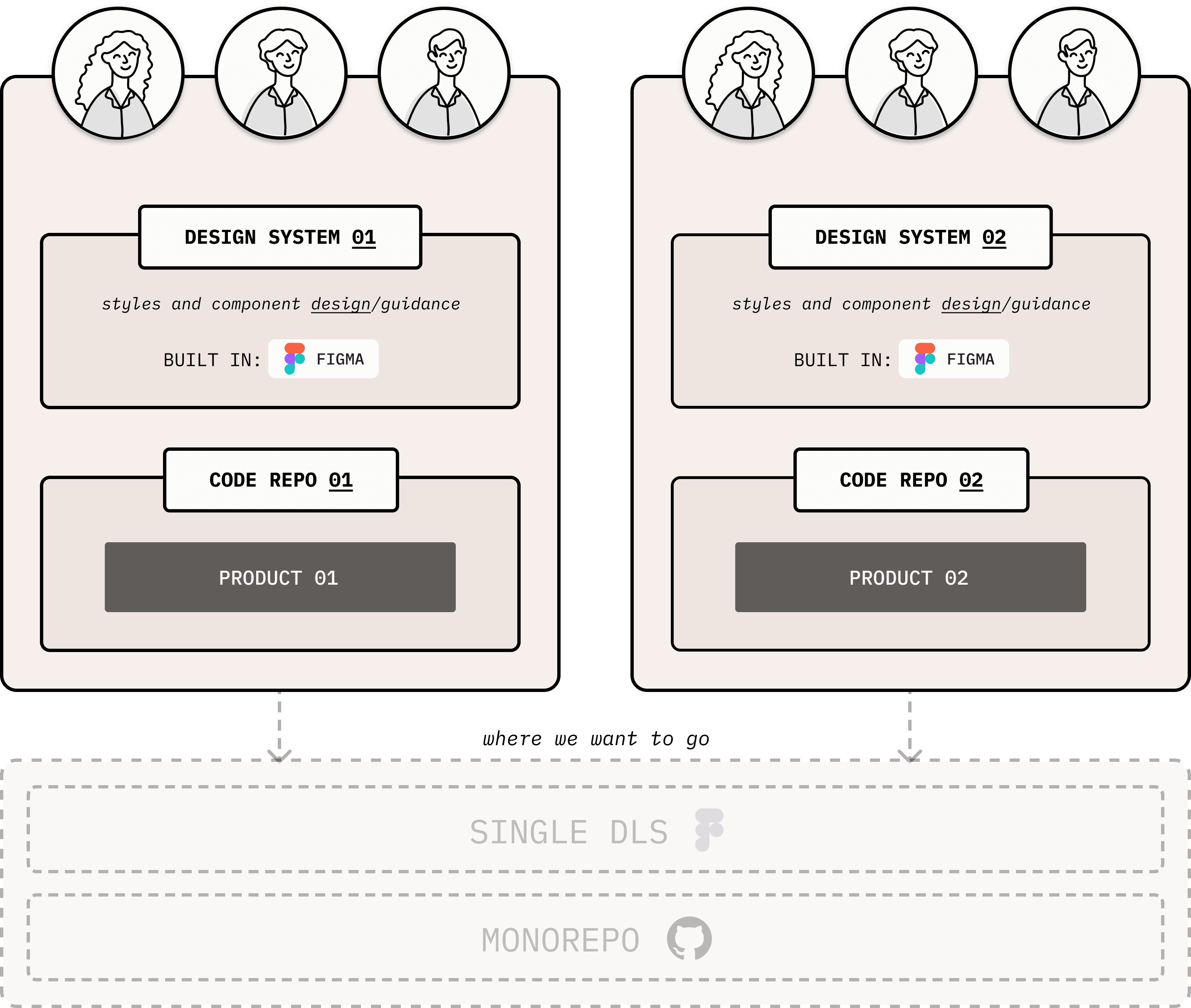
When I joined the company, the two core products operated independently, each with nascent design language system and codebases. Although both systems leveraged Google's Material Design principles, the experiences diverged due to distinct engineering and product design teams, revealing challenges:

Incompatible code repositories duplicated engineering efforts.

Inconsistent design patterns created user confusion and eroded trust.

Project-based team structures limited collaboration, resulting in poor component governance and scalability challenges. 
The catalyst

The turning point came when clients began requesting a unified healthcare experience across products aligned with their brand standards. These requests reframed the challenge from isolated product inconsistencies to a platform-level scalability problem, highlighting the need for a shared design language system.

The turning point

Treating the DLS as a product

The momentum to establish a unified DLS was driven by several factors:

Design team growth enabled dedicated resources to focus on DLS research, development, and advocacy. 

Leadership buy-in prioritized componentization to enable scalable experiences.

Engineering alignment led to consolidating products and creating a shared component repository.

Establishing shared infrastructure

To support a unified design language system, we established shared infrastructure between design and engineering. Design components were centralized in Figma, creating a single source of truth for patterns and UI structure. On the engineering side, Storybook enabled teams to document and validate components, while an Angular-based monorepo allowed shared UI components to be developed and distributed across products.

Together, this infrastructure transformed the DLS from a design artifact into a production-ready system embedded within the platform.

MATERIAL

FIGMA

ANGULAR

GITHUB

STORYBOOK

MATERIAL

FIGMA

ANGULAR

GITHUB

STORYBOOK

Styles: Color Palette

The DLS color palette is built on five standardized values rooted in the M3 philosophy, ensuring the flexibility needed to maintain accessibility standards. Additionally, the system integrates primary client colors, creating a cohesive and seamless healthcare experience for users.

Atoms: Avatars

The avatar is a visual representation of a provider. They humanize the product experience, improve comprehension and interaction. In contrast to generic avatars, avatars with a strong visual identity foster user trust in the providers and in the product.

Molecules: Expansion Panel

The expansion panel component is designed to ingest different styles and atoms (i.e,. color & avatars) forming a unit. With this building block approach the expansion panel component provides a rich playground to build advanced implementations informed by user and business needs.

Organisms: Accordion

The accordion component combines multiple expansion panels into collapsible sections forming distinct sections of the interface. This versatile component helps manage large amount content in a compact user friendly format, reducing cognitive overload, and enhancing usability.

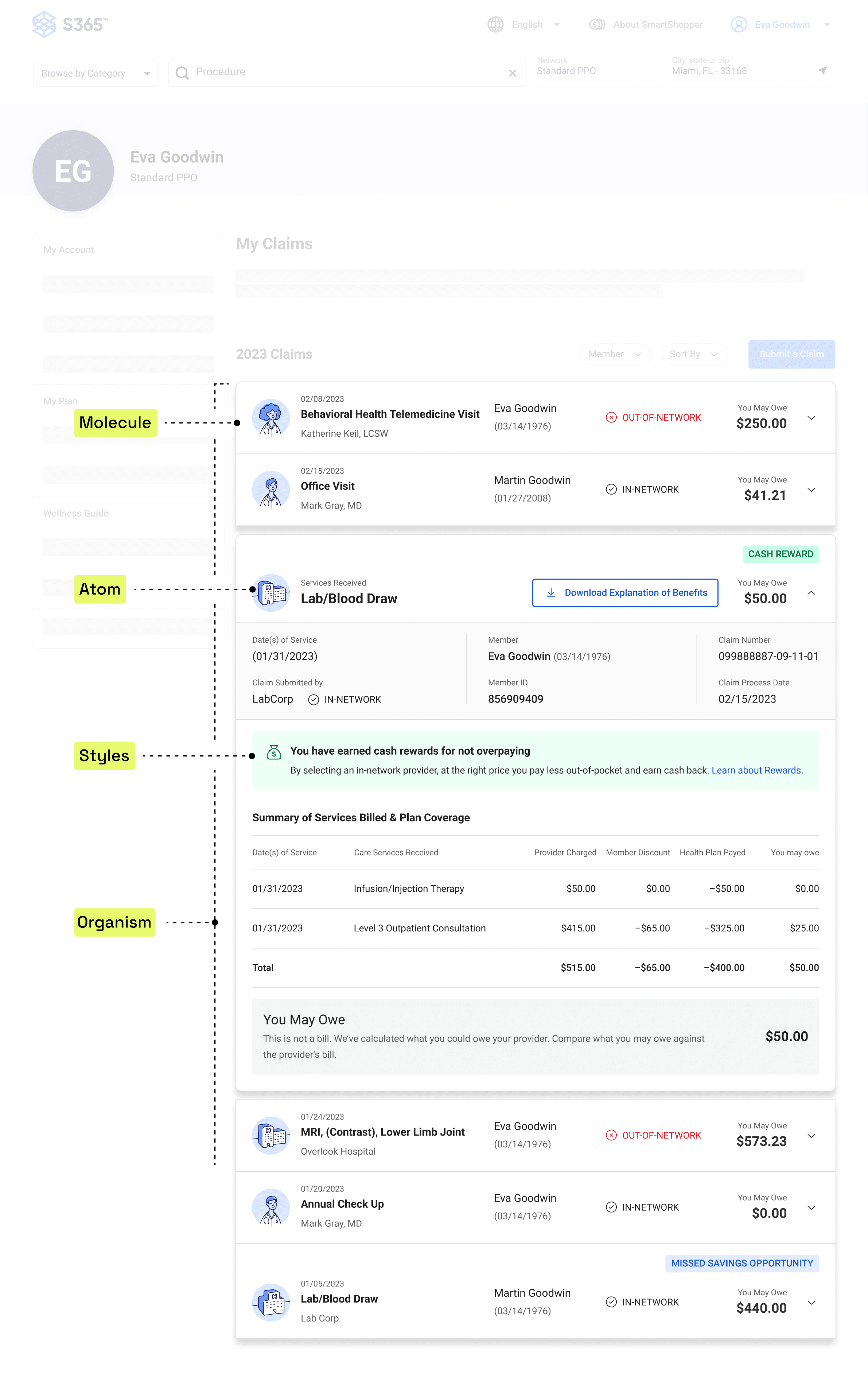
Page: Expansion Panel

The page, the final stage, where all the components of the design system come together, creating a cohesive and functional layout. Applying the atomic design principles, we ensure a reusable, scalable and consistent user experience across the system and over time.

Color is used to help navigate,

support information delivery,

and enhance brand cohesion.

Grey for interactivity or information

Gray 10

#1A1A1A

Gray 35

#5A5A5A

Gray 70

#B3B3B3

Gray 85

#D9D9D9

Grey 95

#F3F3F3

System colors are used to communicate system-level messaging.

Blue 30

#0042B7

Blue 40

#1A5CE2

Blue 70

#98B1FF

Blue 95

#F0F3FF

Green 30

#005933

Green 40

#047646

Green 70

#23CC85

Green 95

#C7FFE8

Orange 55

#F15E00

Yellow 65

#FF8600

Yellow 50

#fefddb

Red 30

#9f0105

Red 40

#CC0F14

Red 70

#FF9690

Red 90

#FFF0ED

Stroke: Black,

opacity 100%

Hair: White, opacity 8%

Skin: White, opacity 80%

Background: White,

opacity 80%

Coat: White, opacity 100%

Client

Primary

Background

Color

Atom/Avatar

CASH REWARD

01/31/2023

Lab/Blood Draw

Lab Corp

Eva Goodwin

(03/14/1976)

IN-NETWORK

You May Owe

$50.00

Style/Color

90

#B7F3DA

116.85:1

Atom/Avatar

Molecule/Card

Atom / Icon

Atom/Lozenge

Molecule/Expansion Panel

02/08/2023

Behavioral Health Telemedicine Visit

Katherine Keil, LCSW

Eva Goodwin

(03/14/1976)

OUT-OF-NETWORK

You May Owe

$250.00

02/15/2023

Office Visit

Mark Gray, MD

Martin Goodwin

(01/27/2008)

IN-NETWORK

You May Owe

$41.21

CASH REWARD

01/31/2023

Lab/Blood Draw

Lab Corp

Eva Goodwin

(03/14/1976)

IN-NETWORK

You May Owe

$50.00

01/24/2023

MRI, (Contrast), Lower Limb Joint

Overlook Hospital

Eva Goodwin

(03/14/1976)

OUT-OF-NETWORK

You May Owe

$573.23

01/20/2023

Annual Check Up

Mark Gray, MD

Eva Goodwin

(03/14/1976)

IN-NETWORK

You May Owe

$0.00

MISSED SAVINGS OPPORTUNITY

01/05/2023

Lab/Blood Draw

Lab Corp

Martin Goodwin

(03/14/1976)

IN-NETWORK

You May Owe

$440.00

Organism/Accordion

02/08/2023

Behavioral Health Telemedicine Visit

Katherine Keil, LCSW

Eva Goodwin

(03/14/1976)

OUT-OF-NETWORK

You May Owe

$250.00

02/15/2023

Office Visit

Mark Gray, MD

Martin Goodwin

(01/27/2008)

IN-NETWORK

You May Owe

$41.21

CASH REWARD

Services Received

Lab/Blood Draw

Download Explanation of Benefits

You May Owe

$50.00

Date(s) of Service

(01/31/2023)

Claim Submitted by

LabCorp

IN-NETWORK

Member

Eva Goodwin

(03/14/1976)

Member ID

856909409

Claim Number

099888887-09-11-01

Claim Process Date

02/15/2023

You have earned cash rewards for not overpaying

By selecting an in-network provider, at the right price you pay less out-of-pocket and earn cash back. Learn about Rewards.

Summary of Services Billed & Plan Coverage

Date(s) of Service

Care Services Received

Provider Charged

Member Discount

Health Plan Payed

You may owe

01/31/2023

Infusion/Injection Therapy

$50.00

$0.00

–$50.00

$0.00

01/31/2023

Level 3 Outpatient Consultation

$415.00

–$65.00

–$325.00

$25.00

Total

$515.00

–$65.00

–$400.00

$50.00

You May Owe

This is not a bill. We’ve calculated what you could owe your provider. Compare what you may owe against the provider’s bill.

$50.00

01/24/2023

MRI, (Contrast), Lower Limb Joint

Overlook Hospital

Eva Goodwin

(03/14/1976)

OUT-OF-NETWORK

You May Owe

$573.23

MISSED SAVINGS OPPORTUNITY

01/05/2023

Lab/Blood Draw

Lab Corp

Martin Goodwin

(03/14/1976)

IN-NETWORK

You May Owe

$440.00

Molecule

Atom

Styles

Organism

Styles: Color Palette

The DLS color palette is built on five standardized values rooted in the M3 philosophy, ensuring the flexibility needed to maintain accessibility standards. Additionally, the system integrates primary client colors, creating a cohesive and seamless healthcare experience for users.

Color is used to help navigate,

Color is used to help navigate,

Color is used to help navigate,

support information delivery,

support information delivery,

support information delivery,

and enhance brand cohesion.

and enhance brand cohesion.

and enhance brand cohesion.

Grey for interactivity or information

Gray 10

Gray 10

#1A1A1A

Gray 35

Gray 35

#5A5A5A

Gray 70

Gray 70

#B3B3B3

Gray 85

Gray 85

#D9D9D9

Grey 95

Grey 95

#F3F3F3

System colors are used to communicate system-level messaging.

Blue 30

Blue 30

#0042B7

Blue 40

Blue 40

#1A5CE2

Blue 70

Blue 70

#98B1FF

Blue 95

Blue 95

#F0F3FF

Green 30

Green 30

#005933

Green 40

Green 40

#047646

Green 70

Green 70

#23CC85

Green 95

Green 95

#C7FFE8

Orange 55

#F15E00

Yellow 65

#FF8600

Yellow 50

#fefddb

Red 30

Red 30

#9f0105

Red 40

Red 40

#CC0F14

Red 70

Red 70

#FF9690

Red 90

Red 90

#FFF0ED

Atoms: Avatars

The avatar is a visual representation of a provider. They humanize the product experience, improve comprehension and interaction. In contrast to generic avatars, avatars with a strong visual identity foster user trust in the providers and in the product.

Stroke: Black,

opacity 100%

Hair: White, opacity 8%

Skin: White, opacity 80%

Background: White,

opacity 80%

Coat: White, opacity 100%

Client

Primary

Background

Color

Molecule/Expansion Panel

Atom/Avatar

Molecules: Expansion Panel

The expansion panel component is designed to ingest different styles and atoms (i.e,. color & avatars) forming a unit. With this building block approach the expansion panel component provides a rich playground to build advanced implementations informed by user and business needs.

CASH REWARD

01/31/2023

Lab/Blood Draw

Lab Corp

Eva Goodwin

(03/14/1976)

IN-NETWORK

You May Owe

$50.00

Style/Color

90

#B7F3DA

116.85:1

Atom/Avatar

Molecule/Card

Atom / Icon

Atom/Lozenge

Molecule/Expansion Panel

Organisms: Accordion

The accordion component combines multiple expansion panels into collapsible sections forming distinct sections of the interface. This versatile component helps manage large amount content in a compact user friendly format, reducing cognitive overload, and enhancing usability.

02/08/2023

Behavioral Health Telemedicine Visit

Katherine Keil, LCSW

Eva Goodwin

(03/14/1976)

OUT-OF-NETWORK

You May Owe

$250.00

02/15/2023

Office Visit

Mark Gray, MD

Martin Goodwin

(01/27/2008)

IN-NETWORK

You May Owe

$41.21

CASH REWARD

01/31/2023

Lab/Blood Draw

Lab Corp

Eva Goodwin

(03/14/1976)

IN-NETWORK

You May Owe

$50.00

01/24/2023

MRI, (Contrast), Lower Limb Joint

Overlook Hospital

Eva Goodwin

(03/14/1976)

OUT-OF-NETWORK

You May Owe

$573.23

01/20/2023

Annual Check Up

Mark Gray, MD

Eva Goodwin

(03/14/1976)

IN-NETWORK

You May Owe

$0.00

MISSED SAVINGS OPPORTUNITY

01/05/2023

Lab/Blood Draw

Lab Corp

Martin Goodwin

(03/14/1976)

IN-NETWORK

You May Owe

$440.00

Organism/Accordion

02/08/2023

Behavioral Health Tele…

Katherine Keil, LCSW

OUT-OF-NETWORK

You May Owe

$250.00

02/15/2023

Office Visit

Mark Gray, MD

IN-NETWORK

You May Owe

$41.21

CASH REWARD

01/31/2023

Lab/Blood Draw

Lab Corp

IN-NETWORK

You May Owe

$50.00

01/24/2023

MRI, (Contrast), Lower …

Overlook Hospital

OUT-OF-NETWORK

You May Owe

$573.23

01/20/2023

Annual Check Up

Mark Gray, MD

IN-NETWORK

You May Owe

$0.00

MISSED SAVINGS OPPORTUNITY

01/05/2023

Lab/Blood Draw

Lab Corp

IN-NETWORK

You May Owe

$440.00

Page: Expansion Panel

The page, the final stage, where all the components of the design system come together, creating a cohesive and functional layout. Applying the atomic design principles, we ensure a reusable, scalable and consistent user experience across the system and over time.

02/08/2023

Behavioral Health Telemedicine Visit

Katherine Keil, LCSW

Eva Goodwin

(03/14/1976)

OUT-OF-NETWORK

You May Owe

$250.00

02/15/2023

Office Visit

Mark Gray, MD

Martin Goodwin

(01/27/2008)

IN-NETWORK

You May Owe

$41.21

CASH REWARD

Services Received

Lab/Blood Draw

Download Explanation of Benefits

You May Owe

$50.00

Date(s) of Service

(01/31/2023)

Claim Submitted by

LabCorp

IN-NETWORK

Member

Eva Goodwin

(03/14/1976)

Member ID

856909409

Claim Number

099888887-09-11-01

Claim Process Date

02/15/2023

You have earned cash rewards for not overpaying

By selecting an in-network provider, at the right price you pay less out-of-pocket and earn cash back. Learn about Rewards.

Summary of Services Billed & Plan Coverage

Date(s) of Service

Care Services Received

Provider Charged

Member Discount

Health Plan Payed

You may owe

01/31/2023

Infusion/Injection Therapy

$50.00

$0.00

–$50.00

$0.00

01/31/2023

Level 3 Outpatient Consultation

$415.00

–$65.00

–$325.00

$25.00

Total

$515.00

–$65.00

–$400.00

$50.00

You May Owe

This is not a bill. We’ve calculated what you could owe your provider. Compare what you may owe against the provider’s bill.

$50.00

01/24/2023

MRI, (Contrast), Lower Limb Joint

Overlook Hospital

Eva Goodwin

(03/14/1976)

OUT-OF-NETWORK

You May Owe

$573.23

MISSED SAVINGS OPPORTUNITY

01/05/2023

Lab/Blood Draw

Lab Corp

Martin Goodwin

(03/14/1976)

IN-NETWORK

You May Owe

$440.00

Molecule

Atom

Styles

Organism

Operationalizing the design system

Shaping the process to deliver interface at scale

Without a dedicated design-engineering team, the design language system evolved within existing product workflows. I helped move the organization beyond a project-based model by establishing shared governance, strengthening design-engineering collaboration, and integrating research, component development, and product integration. These practices helped product teams adopt the system more consistently and positioned the design language system as a shared platform capability rather than a design artifact.

01/ Research & Collaboration

01/ Research & Collaboration

01/ Research & Collaboration

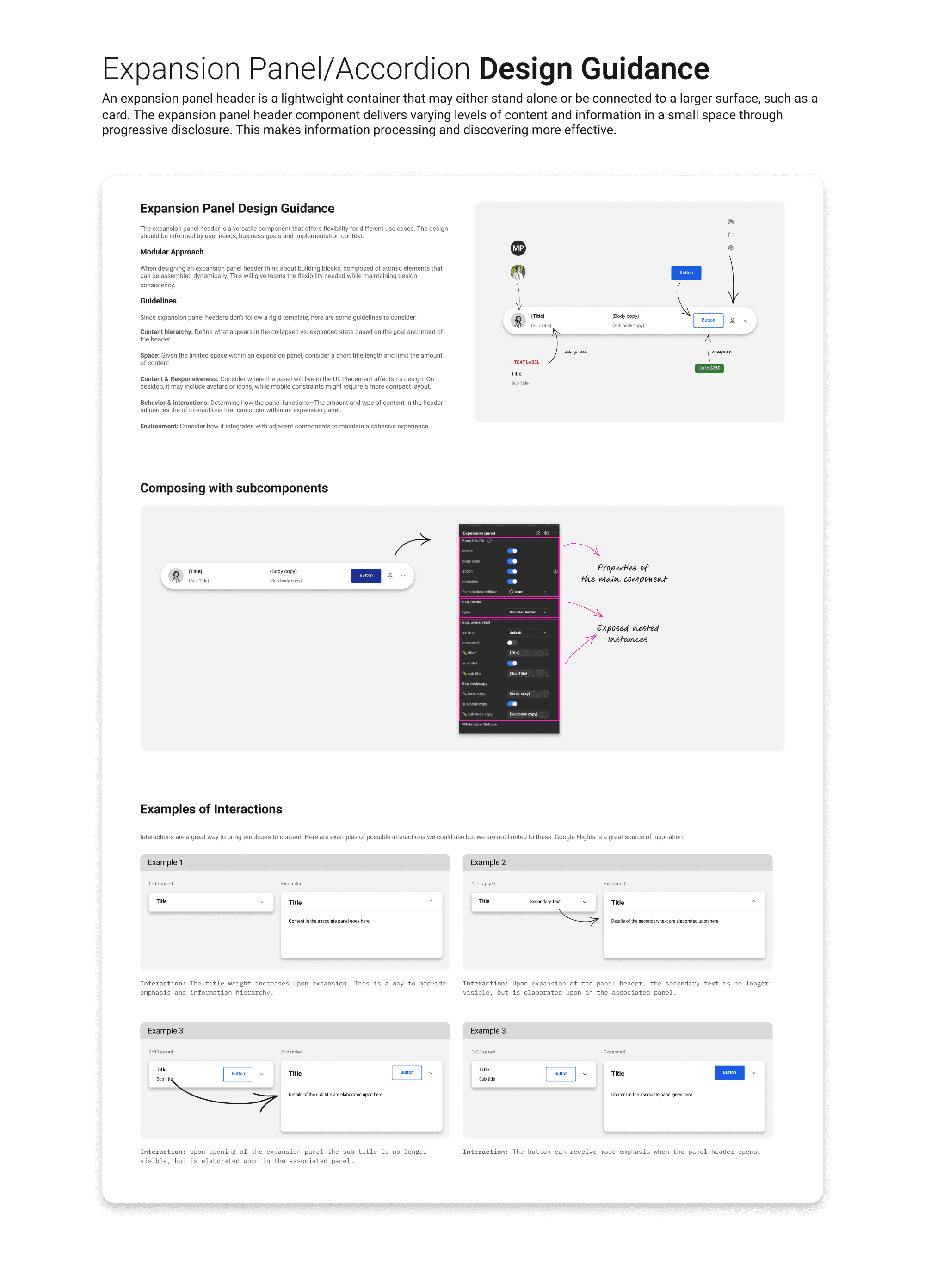
Designers conduct research to define a product-driven perspective on each component. While weekly design-engineering syncs ensure alignment and refinement.

Figma
02/ Build & Document

02/ Build & Document

02/ Build & Document

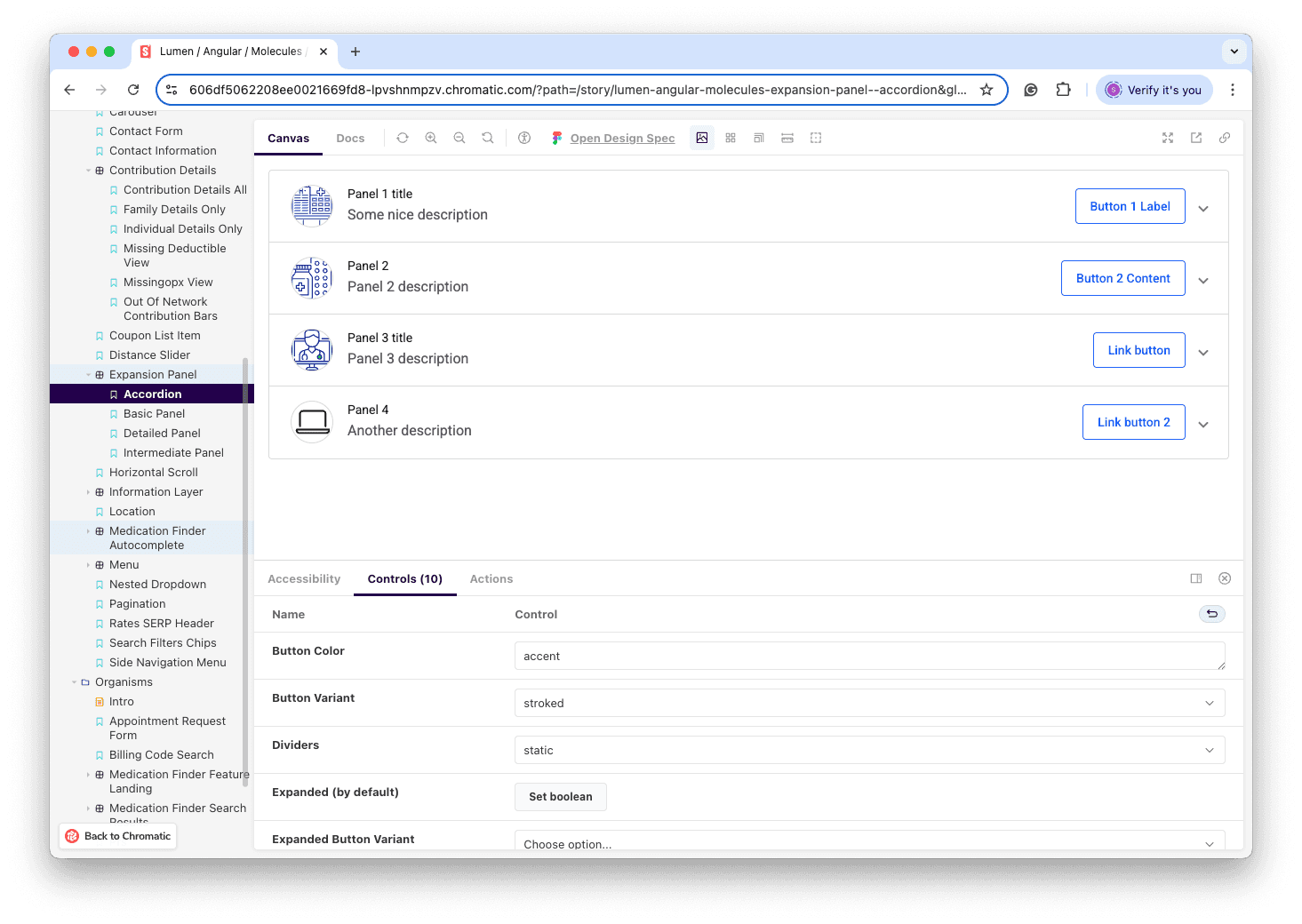
Engineers translate Figma designs into coded components housed in a shared monorepo. Each component is documented in Storybook to support reuse, accessibility, and consistent implementation across products.

Storybook
03/ Deployement & Integration

03/ Deployement & Integration

03/ Deployement & Integration

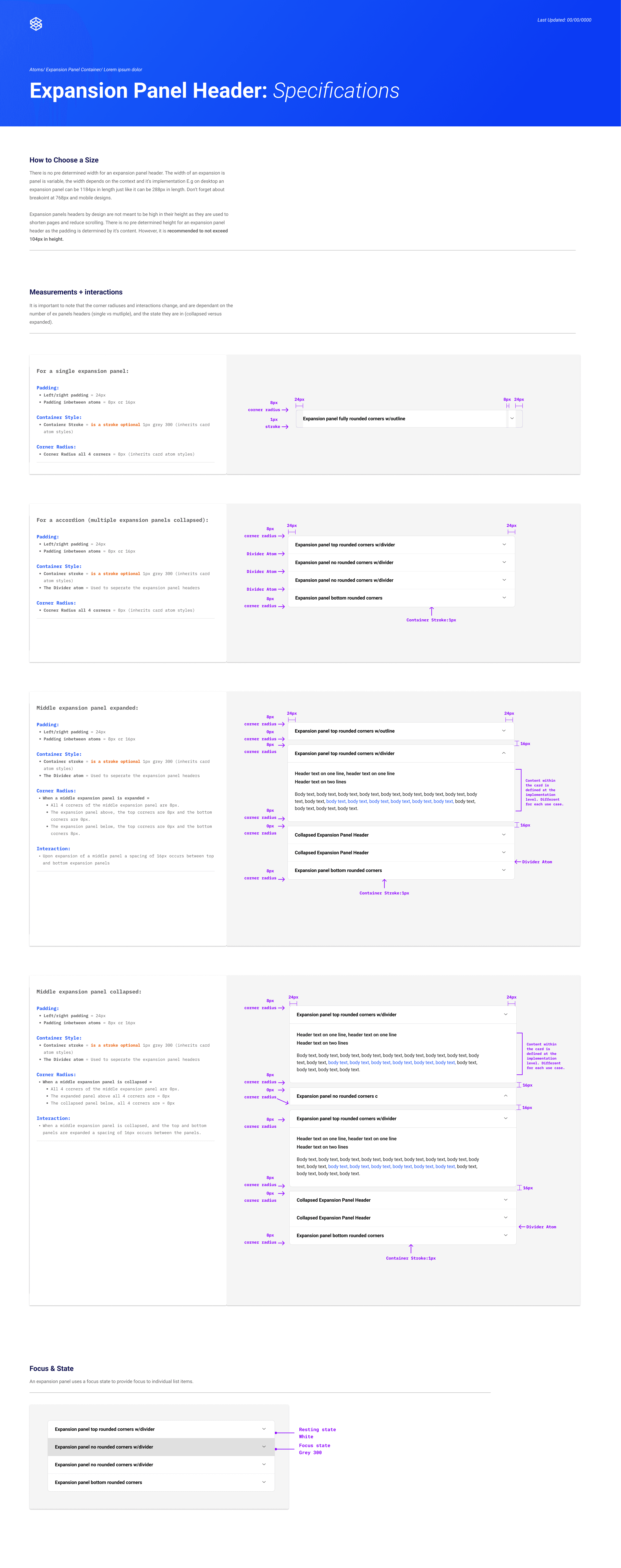
New features adopt system components by default, while legacy elements are gradually replaced.

Product Integration

Building a design system

Designing for scalability in a white-label B2B2B2C platform

Designing a system for a white-label platform required delivering a cohesive, scalable system that supports the variability required across products, clients and third-party integrations. Components needed to adapt to client configurations, APIs and branding, each introducing unique requirements.

In early iterations of the DLS, components became tightly coupled to specific implementations, making them difficult to evolve without creating additional variants. This introduced complexity, inconsistencies, and growing maintenance overhead for both design and engineering.

As the system has matured, components are being restructured to separate structure, behavior and presentation into a composable layers. Through extensible patterns and slot-based composition, components can now accommodate for variability, reducing duplication, improving consistency and lowering overhead. 

The result V1

Foundation for scalability

The DLS evolved from two fragmented systems into a unified, scalable framework that enables teams to:
Create a consistent product experience across platforms, strengthening trust and reducing user confusion caused by divergent design patterns.

Create a consistent product experience across platforms, strengthening trust and reducing user confusion caused by divergent design patterns.

Operationalize accessibility within core components, ensuring inclusive design standards are built into the system rather than addressed retroactively.

Operationalize accessibility within core components, ensuring inclusive design standards are built into the system rather than addressed retroactively.

Establish shared design and engineering foundations, replacing fragmented implementations with reusable components and clear governance.

Establish shared design and engineering foundations, replacing fragmented implementations with reusable components and clear governance.

Accelerate product delivery through standardized building blocks, enabling teams to prototype, integrate, and iterate more efficiently across products.

Accelerate product delivery through standardized building blocks, enabling teams to prototype, integrate, and iterate more efficiently across products.

While the system created a shared foundation across products, scaling it across the enterprise required more than reusable components. It required a governance model capable of supporting collaboration across teams.

Evolution and growth

Moving towards a federated model

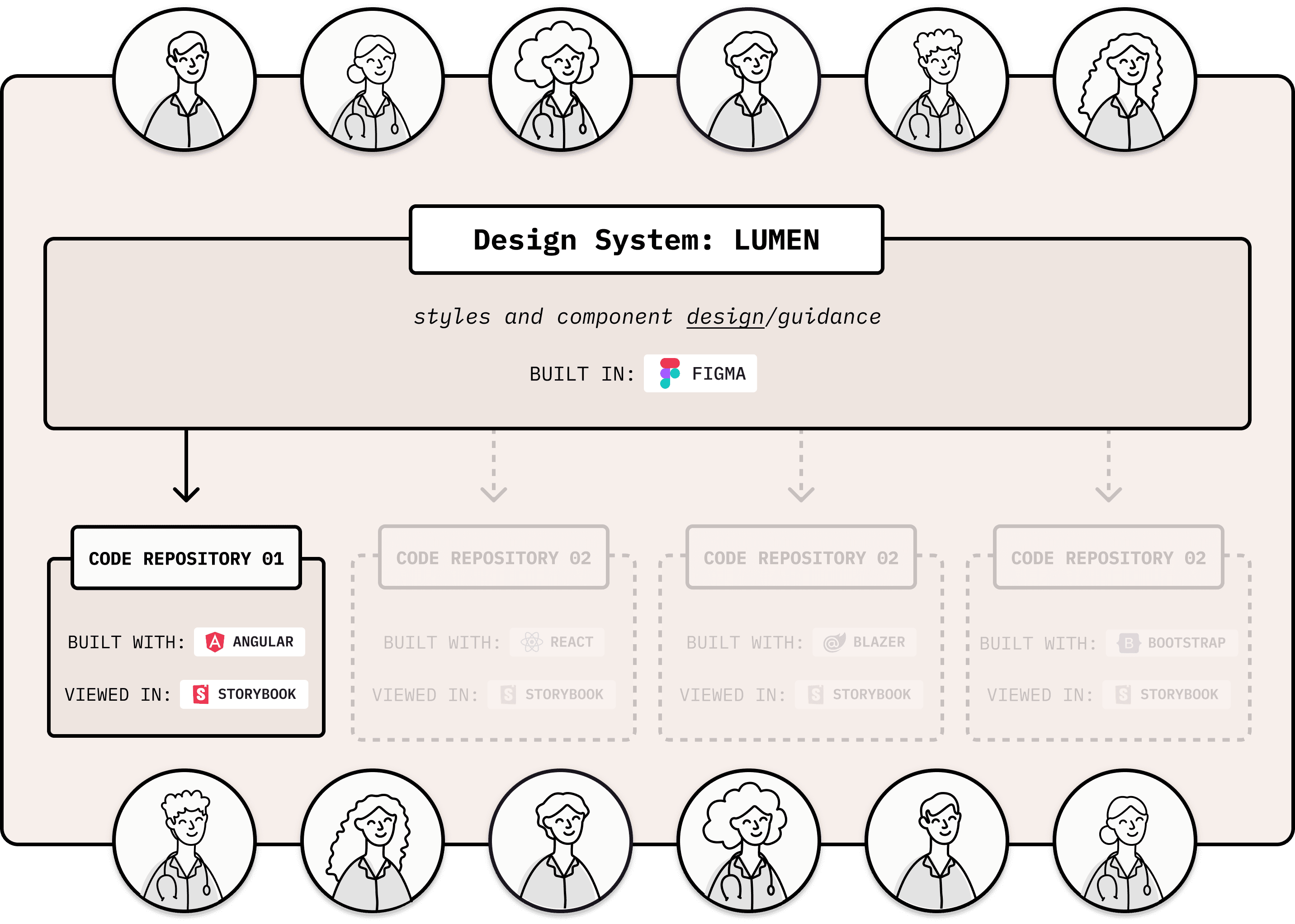
Following the acquisition, the organization shifted from a centralized design system to a federated governance model supporting alignment across enterprise products. As stewards of the original system, our team guided this transition, and I helped shape governance practices by facilitating cross-team working sessions, defining contribution expectations, and supporting system adoption across teams. These efforts helped position the existing system as the foundation for Lumen, the new enterprise design language system.

As adoption expanded, the federated model surfaced new challenges. Teams operated with different priorities, contribution models were still forming, and the level of investment required to scale the system across the enterprise remained unclear.
The result V2

The design system's impact

While the federated model created a path toward enterprise alignment, shifting organizational priorities limited the team’s capacity to fully operationalize it. Even so, the core design language system continues to evolve as product needs emerge, positioning the system for future scale.

36%

36%

36%

increase in project delivery across design and front-end workflows

6

6

6

enterprise products adopted the Design Language System

80

80

80

employees adopted the Design Language System.

Reflections

01 /

Design systems require organizational investment:

A design language system cannot succeed as a side project. Sustaining a scalable system requires dedicated ownership, governance, and cross-team collaboration. Organizations should treat design systems as platform infrastructure rather than supporting artifacts, and invest accordingly to ensure long-term adoption and impact.

01 /

Design systems require organizational investment:

A design language system cannot succeed as a side project. Sustaining a scalable system requires dedicated ownership, governance, and cross-team collaboration. Organizations should treat design systems as platform infrastructure rather than supporting artifacts, and invest accordingly to ensure long-term adoption and impact.

02 /

Not every design system should be built from scratch

02 /

Not every design system should be built from scratch

Sandrine Daly

Product designer based in New York, shaping systems that help people make decisions by clarifying what matters.

Sandrine Daly

Product designer based in New York, shaping systems that help people make decisions by clarifying what matters.

Sandrine Daly

Product designer based in New York, shaping systems that help people make decisions by clarifying what matters.