Building an intent-driven search system
Transformed a rigid search experience into an intent-driven system using NLP to interpret how members search and evaluate care, improving relevance and establishing a foundation for future search capabilities.


Search is a foundational capability within a white-labeled provider directory for health insurance, shaping how millions of members discover and evaluate care. Over time, evolving client needs and legacy constraints fragmented the system, limiting its ability to adapt to modern search behaviors.
Challenge 1
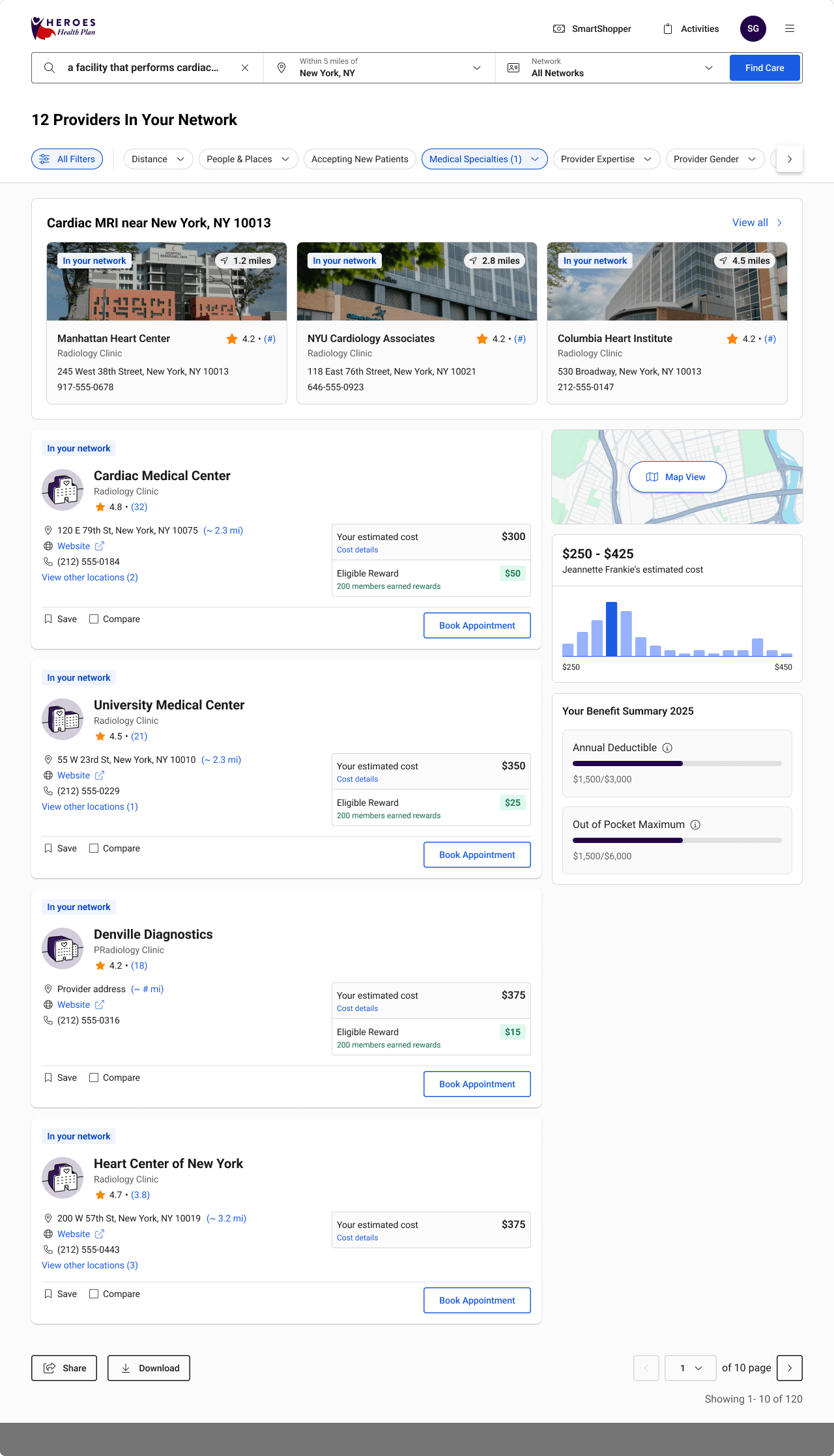
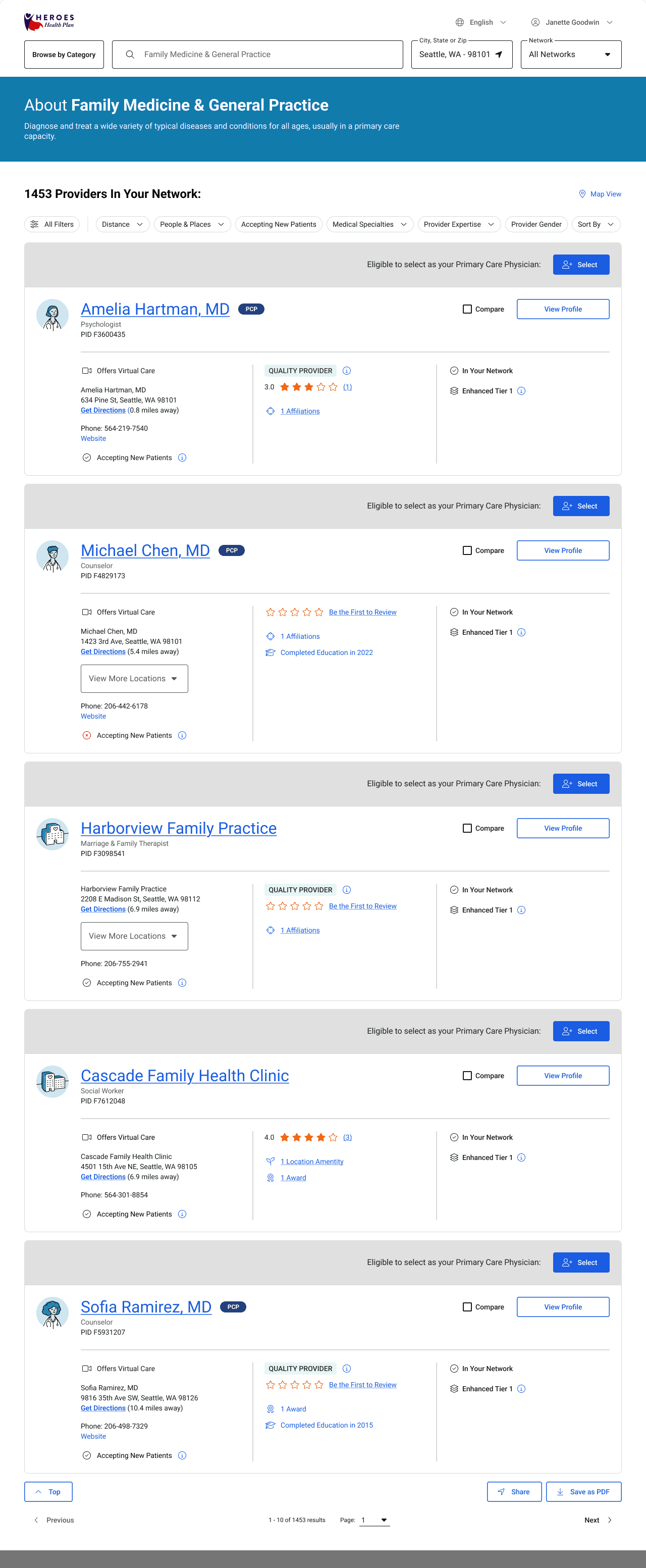
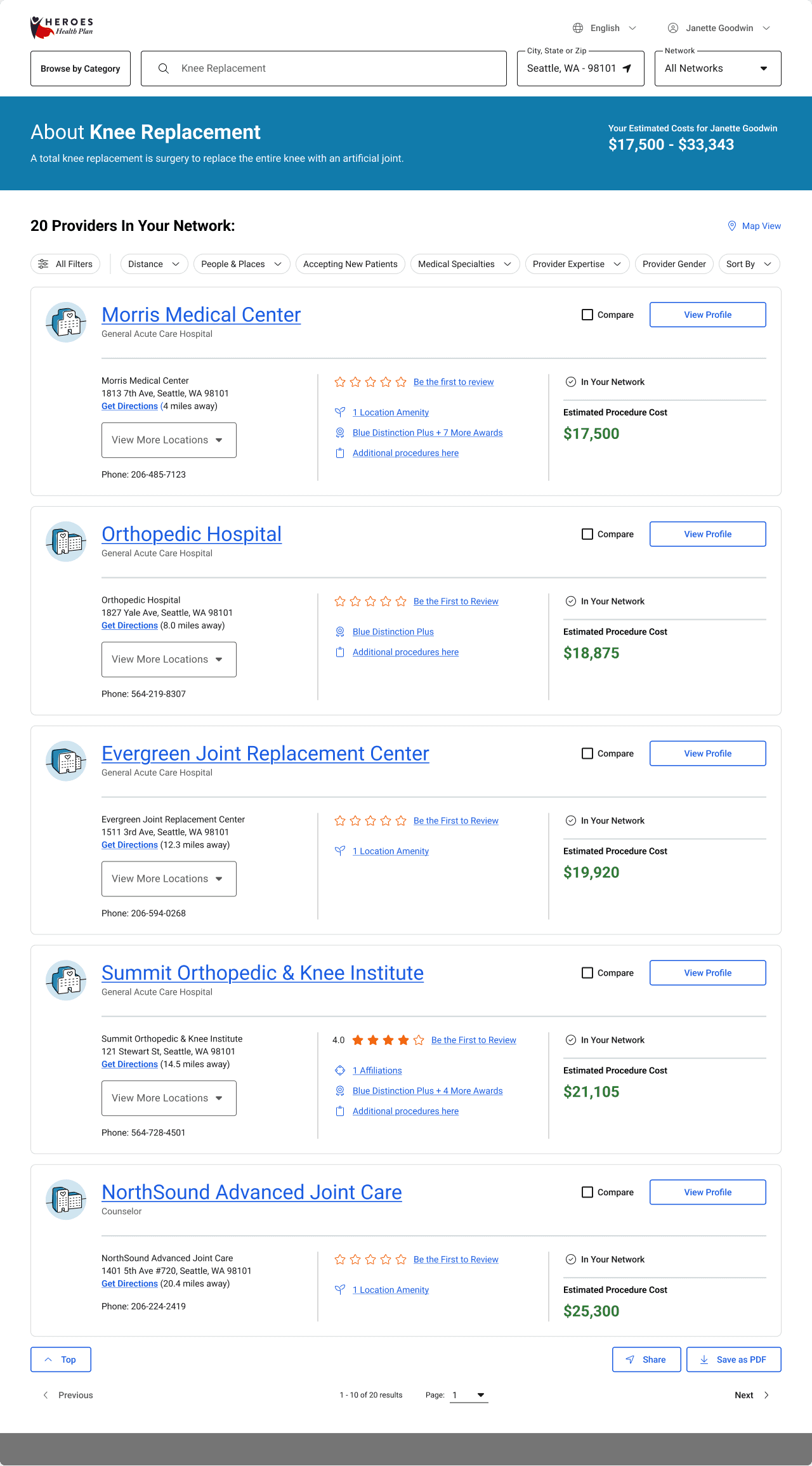
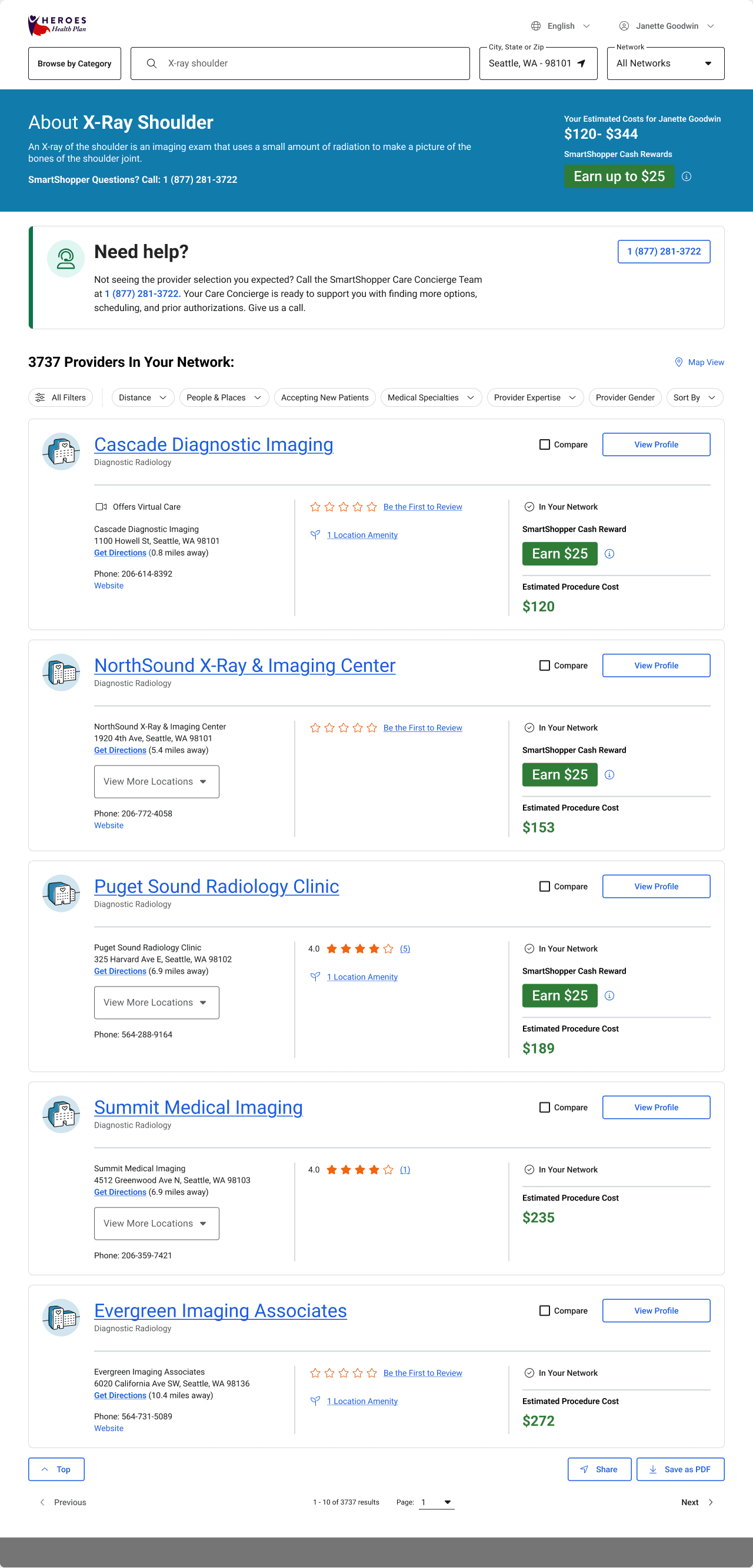
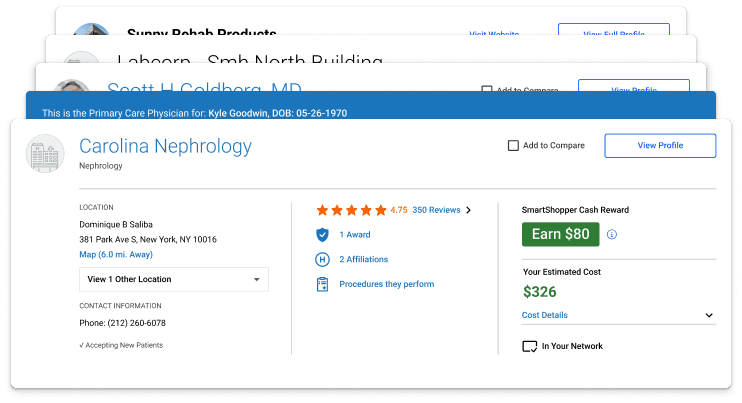
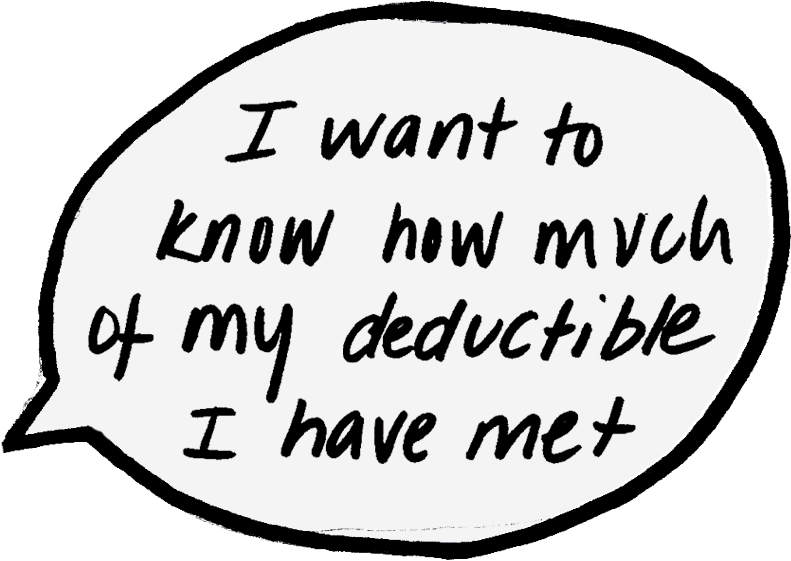
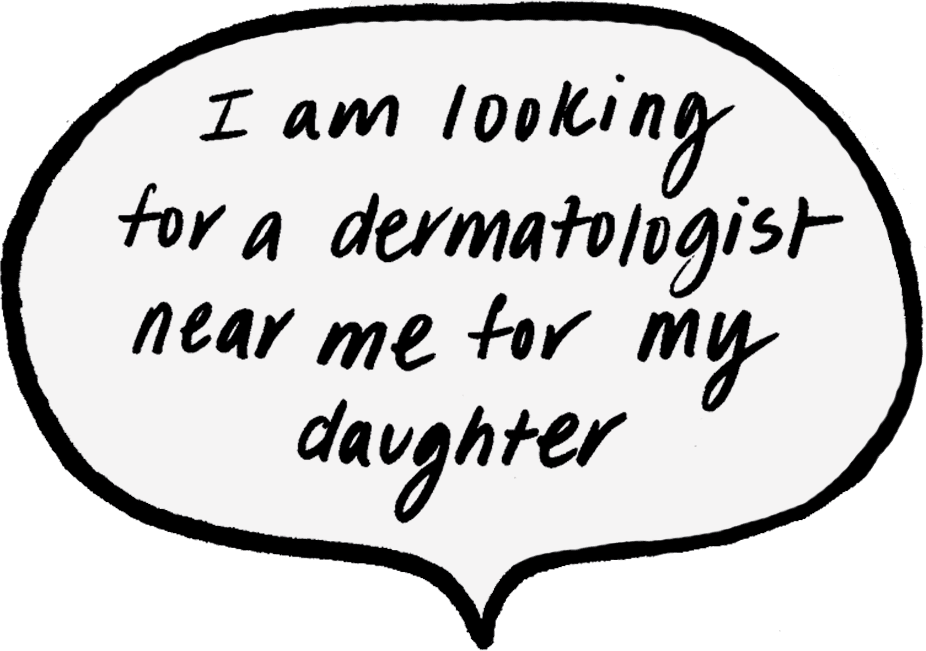
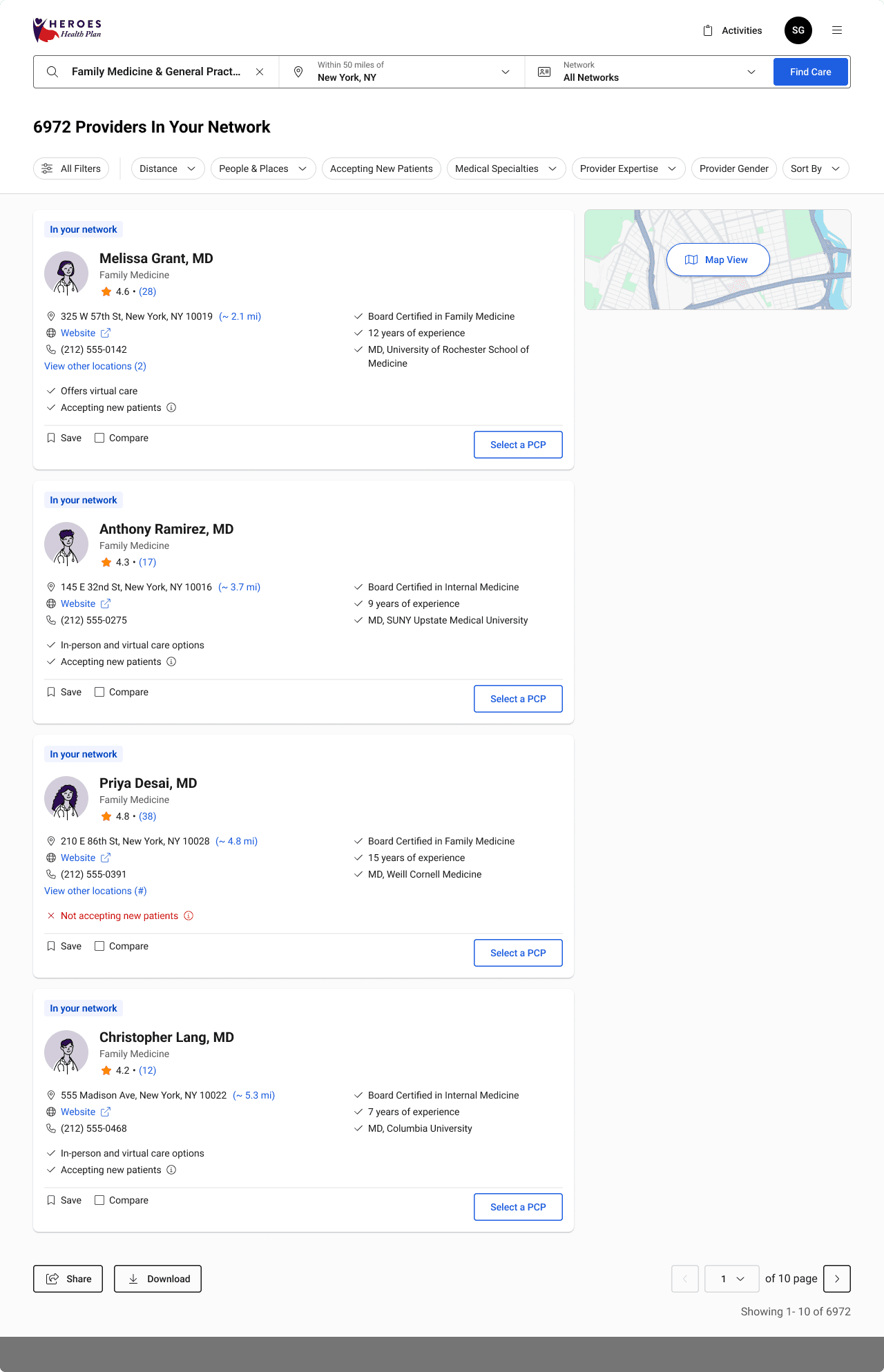
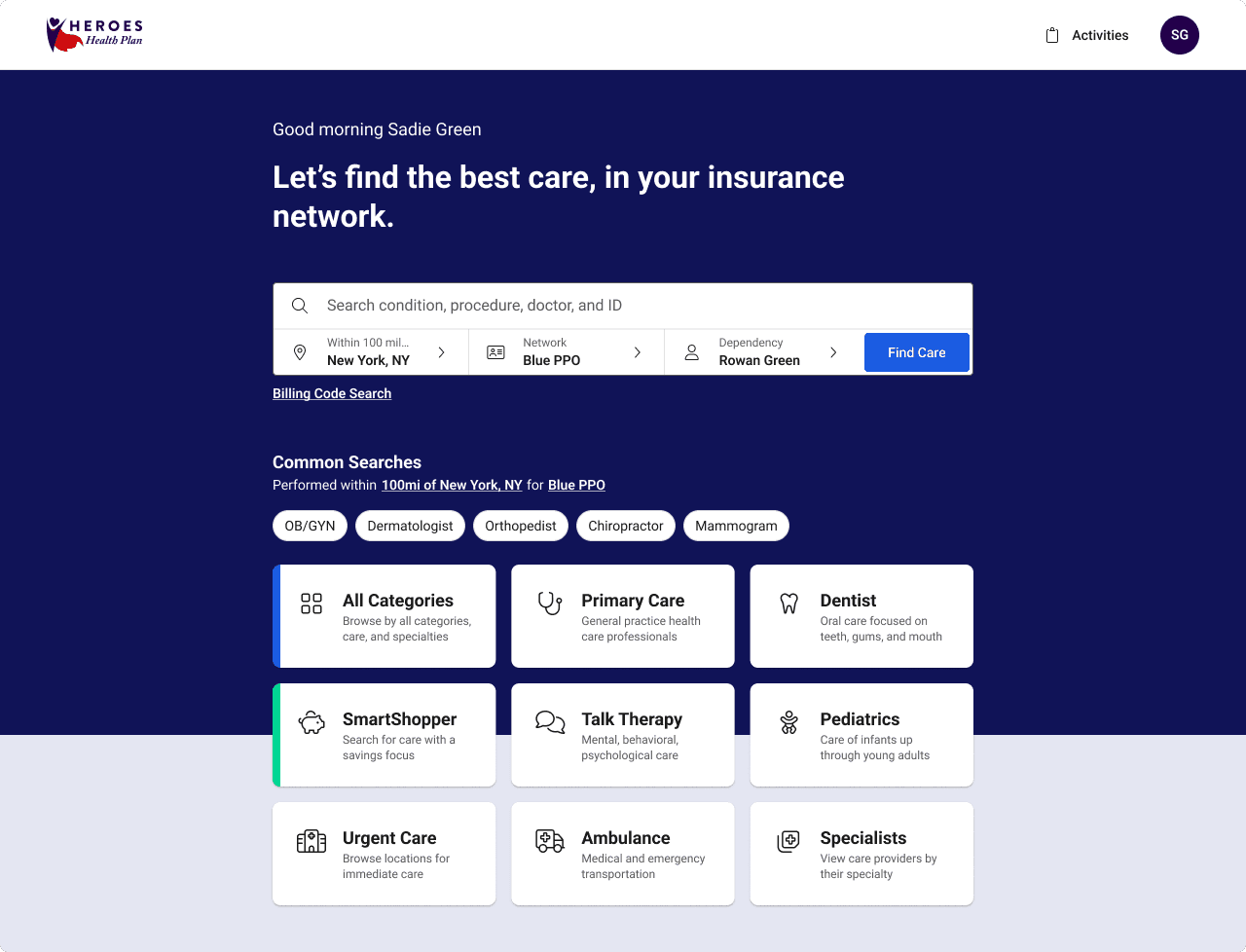
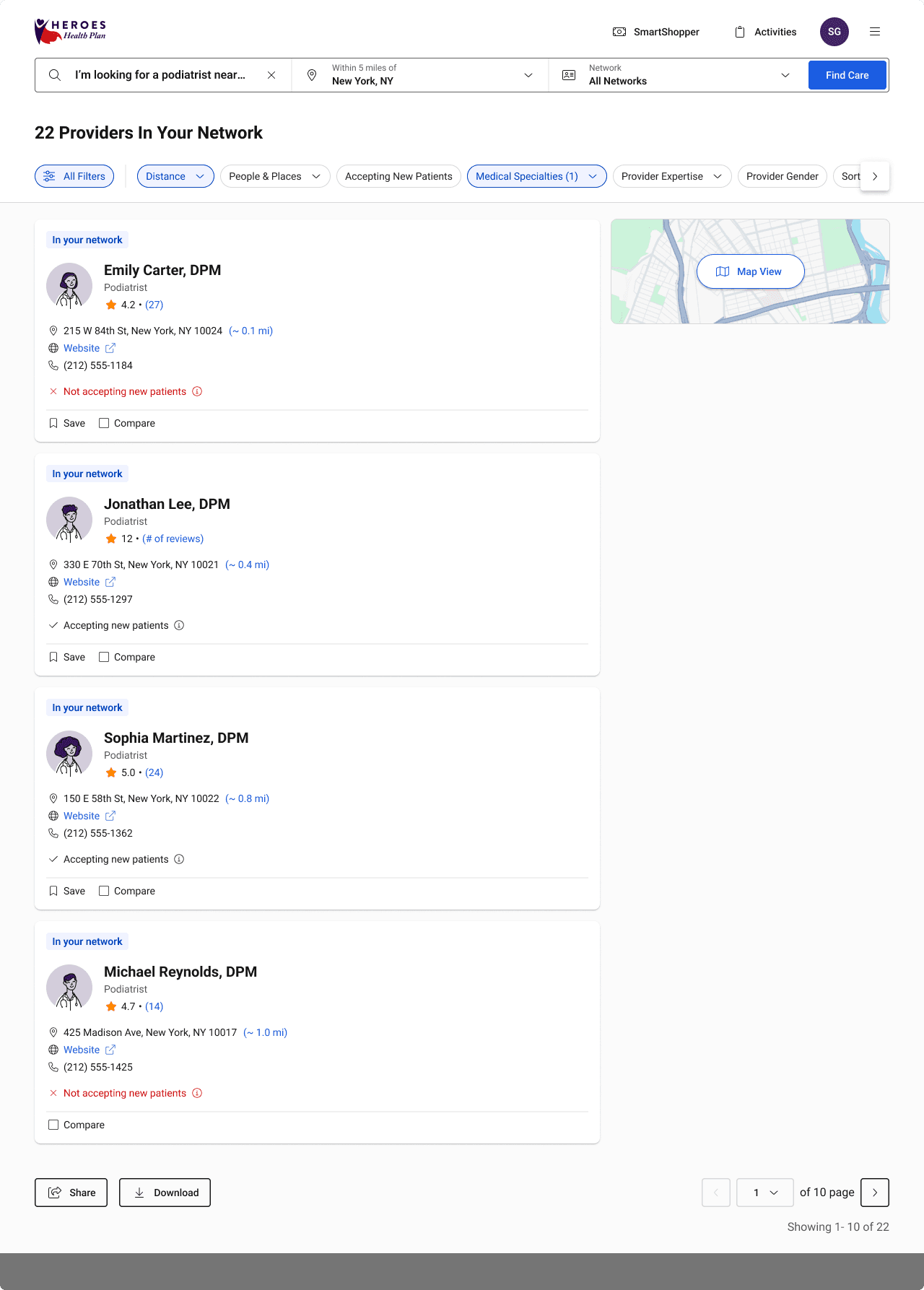
Search results often failed to reflect user intent, making it hard for people to find appropriate care. Members seek different types of information depending on their search intent, but uniform result structures create a disconnect between what users are looking for and what the platform surfaces.
While there are some difference between these different search result pages the xxxx

Challenge 2
Limited platform adaptability, where rigid search architecture and tightly coupled components struggled to support modern search experiences, partner integrations, and evolving business needs, while also slowing teams’ ability to iterate or improve the experience.





Challenge 3
Outdated search technology that struggled to support modern intent-based search behaviors, frequently leading to irrelevant or no results.


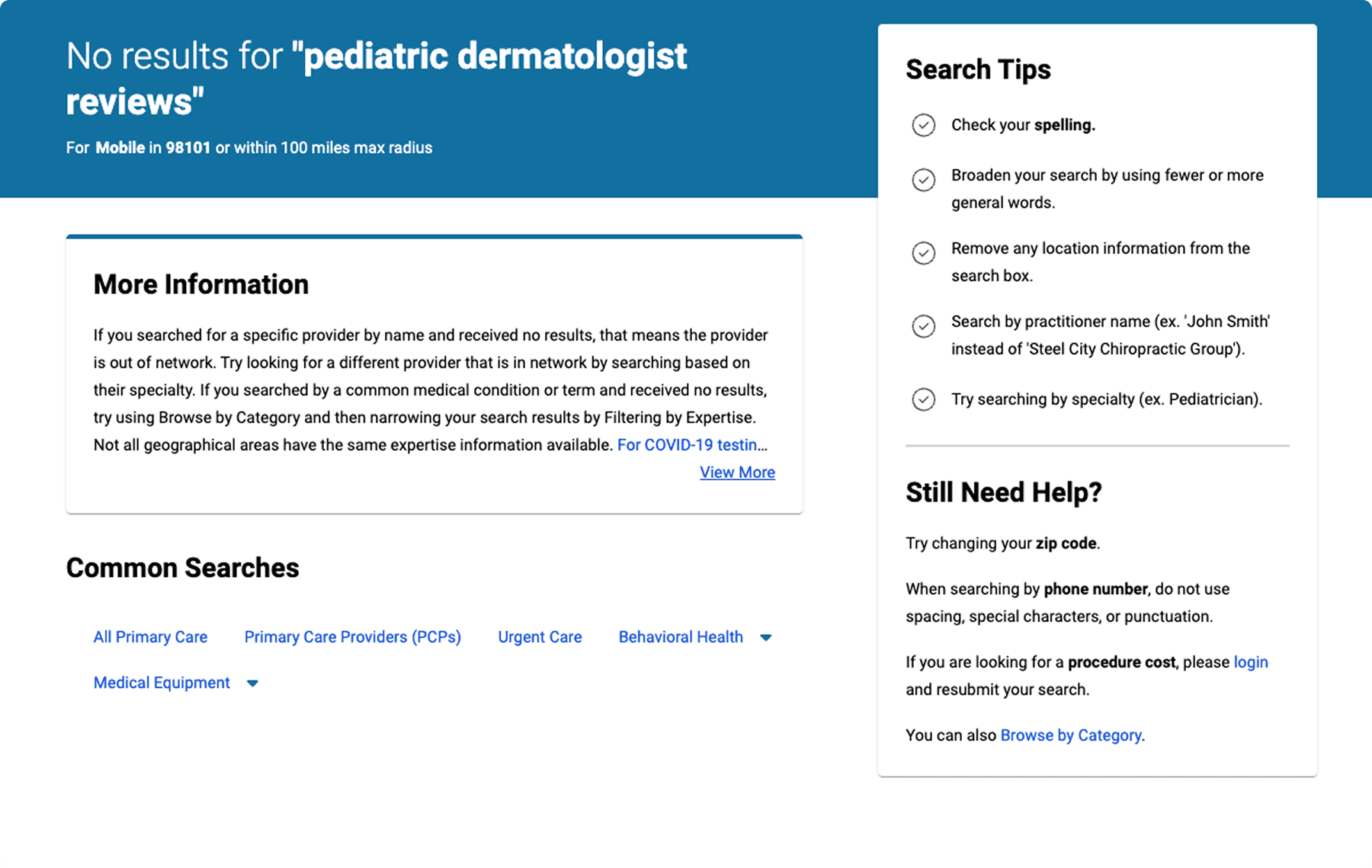
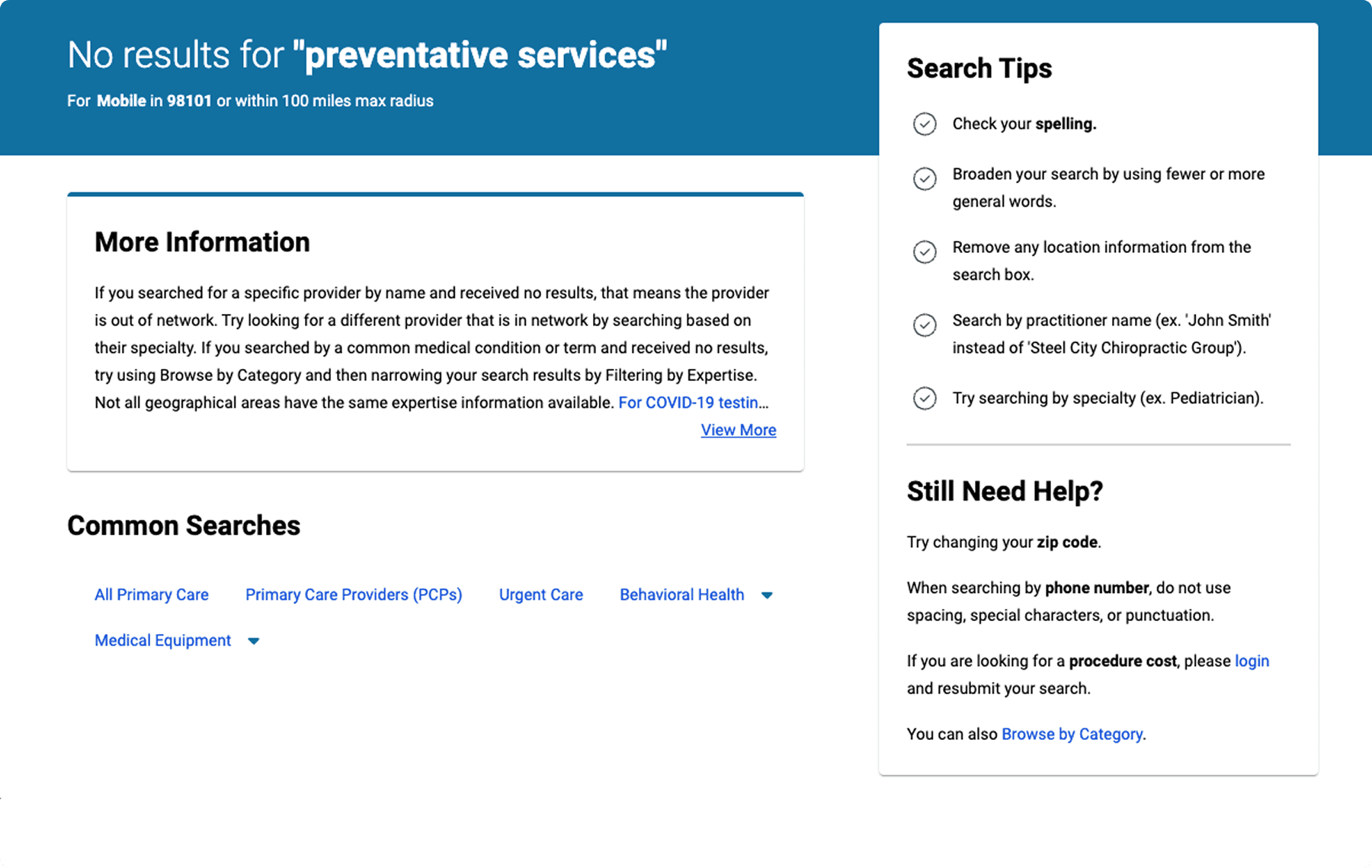

As a result, search capabilities weren’t evolving with user expectations or industry standards. In healthcare, where finding care is foundational, this wasn’t just a usability problem. It became a credibility problem, reinforcing the lack of trust people already feel toward their health insurance experience.
Driving the UX vision and strategy
The foundation of the UX vision
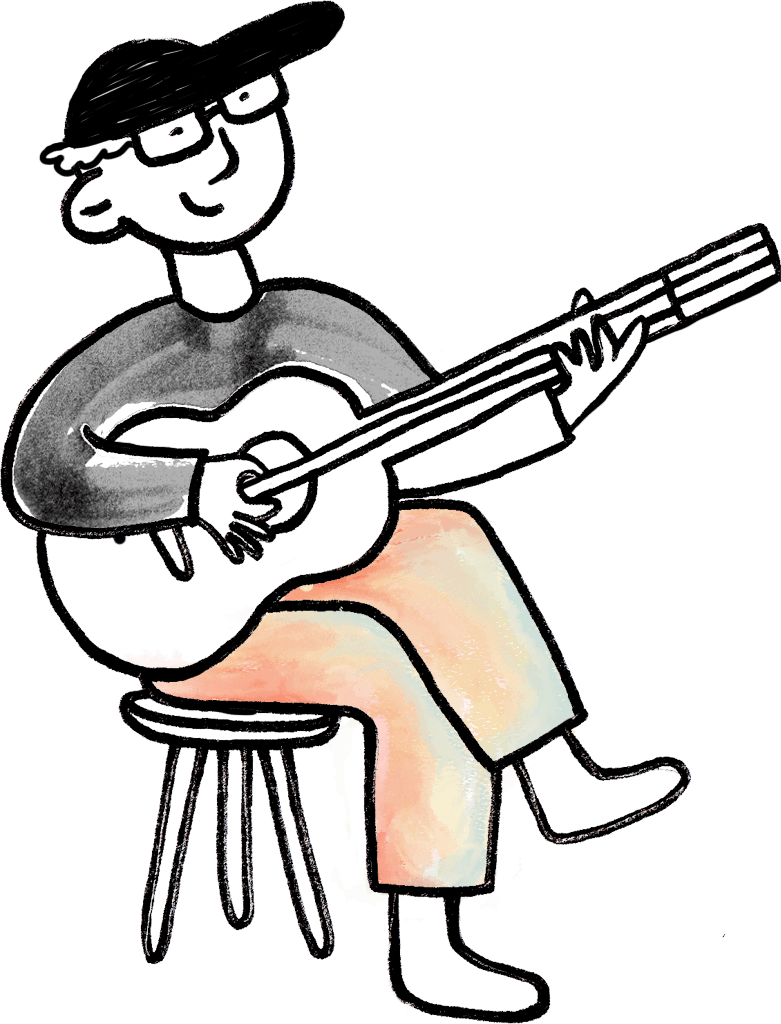
Search redesign emerged from a collaborative effort across Product and Design to better understand how people search for care. Together, we developed “Find” perspectives grounded and informed by:
01/
Research and insights
02/
Product discovery
These perspectives informed how user intent shapes the queries people construct, the criteria they rely on and the system's corresponding experiences, informing a North Star vision for intent-driven search and establishing a unified direction that continues to guide search investments.






Driving the UX vision and strategy
The trigger for the overhaul
As platform constraints compounded, product and design teams could no longer deliver meaningful impact through incremental improvements alone. In close partnership with my product counterpart, we used foundational artifacts, along with research and evidence from prior product successes, to reframe conversations with leadership. By explicitly connecting user impact, delivery constraints, and business risk, we helped secure alignment and investment in a full-scale SERP redesign.
SERP evolution is not simply a redesign; it’s an investment in the user experience, product growth, and client retention.
The outcome
An intent-driven, modular search system.
With alignment and investment secured, I helped shape and steward a user intent–driven search system built on shared foundations, giving teams a decision framework to design and build scalable solutions that meet current and future user, product, and client needs.

Metrics
Early signals & validation
To evaluate the impact of the redesigned system across key search journeys, benchmarking studies were conducted. The redesigned experience consistently outperformed or matched the existing experience, with task-level metrics showing the strongest gains across all journeys while overall system usability (SUS) remained stable. While these findings are not production metrics, they provide early signals that the work has improved usability, discoverability, and user confidence.
Task success improved over the experience, with the largest gains in complex tasks such as accessing and understanding cost and reward programs.
88%
New Avg.
68%
Old Avg.
Perceived ease of use (SEQ) improved from “difficult to “very easy” when relevant information, such as provider bios, was surfaced within the experience.
OLD SUS
NEW SUS
1
2
3
4
5
Very Difficult
Very Easy
System usability (SUS) improved as discoverability and interaction aligned with users’ mental models, with the map experience showing the strongest gains and indicating increased confidence and higher satisfaction.
Excellent
SUS Score: 87
New SUS
Old SUS
Average
SUS Score:75
Looking ahead
Expanding conversational and schema-driven search results
The MVP established a foundation for interpreting intent within Category Search while introducing schema-driven structures that adapt results to user goals. Future work focuses on expanding conversational query interpretation to support a broader spectrum of search behaviors. In parallel, schemas will continue to evolve to surface richer, contextually relevant information aligned with intent. The system will also expand to support combined-category and non-category searches, better reflecting how users navigate decisions throughout their healthcare journey.